

Subscribe To The Newsletter Now

Subscribe To The HoopTactics Newsletter

Recently @ HoopTactics


Inside HoopTactics

Basketball Tips & Strategies – April 2012

HoopTactics Newsletter

Importance of Setting Goals
Total Program Evaluation
Off Season Player Skill Development
Player Responsibility for Improving Skills
Value & Benefits of Playing 3-on-3

Coaching Tips: Setting Goals is a Key to Success

After a long season, coaches need to take some time off to recuperate and re‐charge their batteries. However, before doing so, while it is fresh in your mind, review, analyze and evaluate the past season. Examine exactly what was accomplished, what was successful, and what needs to be improved in the coming year. Then use this information to set goals and objectives for the coming season. Caution: Setting goals, like potential energy, is useless until action is taken to implement and achieve them.

Total Program Evaluation Invaluable to Successful Goal Setting

Basketball coaches, just like any other member of the teaching profession, need to evaluate their own program and personal performance. Personal evaluations are something that is generally disliked. However, they are vital to the improvement of any coach and basketball program, especially the self‐evaluations.

To view/print HoopTactics’  Total Program Evaluation  (Program Review, Coach Self-Evaluations, Player Evaluations, Support Staff ) forms  – Click Here

 Player Development: Off Season Training

From October to April, teams are made. From April to October, individual players are made. This is the time of the year that players must develop and improve their individual basketball skills and techniques along with their physical attributes. However, to be successful, they must first take the time to do a self‐evaluation.

Players should compile a list of the things they did well this past season, and the things they must or could improve. Things that they can do to make themsellves more solid, stronger, aggressive and intelligent when they take the court this coming season. They should also seek input and specific recommendations for off season improvement from their coaches . Then use this self‐evaluation to plan and execute their off season workouts and skill development.

 Player Development: Do It Yourself Program

Baba Watson’s recent winning of  the Masters’ Golf Tournament is a prime example of self motivation and development. He won the most prestigious professional tournament in golf without ever taking a golf lesson. He has learned and perfected the game of golf on his own initiative.

Basketball is like a savings account at a bank. What you put into it, is exactly what you will get out of it. Players must prepare for the best. They should work individually on the things they need to improve, not just their strengths. Players do not need to depend on coaches, parents or personal trainers to be successful. They must be self-motivated and rely on themselves.  Individual improvement is not all fun and games. Much of off season skill development is repetitive, monotonous and tedious. Bad habits can be practiced as well as good. However, remember: “If it’s going to be. . . It’s up to me.” – George Raveling.

Player Development: Playing Three-on-Three

Players should organize and play a lot of three-on-three half court competition during the off season. Since 3-on-3 provides for much more shooting, passing, rebounding, screening, and defensive repetitions, it is by far, the most efficient and effective use of their time in practicing and improving their fundamental skills. 

In a full court game of approximate a hour and a half, How many shots does a player take? How many rebounds do theygrab? How many passes do they make? How many screens do they set and use? How many times do they guard a player with the ball? How many times do they defend against dribble penetration? How many times do they guard a player without the ball? Compare these figures with the totals that they would receive in playing the same  1 1/2 hours of three on three half court and you will instantly see the importance and value of 3-on-3 in improving and developing individual basketball skills to their fullest. 

In addition, after a long, hard season, 3-on-3 also saves additional wear and tear of players legs. Playing full court only reinforces current abilities. It also will help eliminate burn-out.

 FREE Printable Court Diagrams
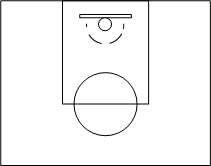
 

College/HS, NBA, International court formats. Choose from 36 different styles: Full court (12), half courts (18) and combinations (6 ). Click Here


Join the HoopTactics’ Team and Gain a Competitive Advantage

HoopTactics is a comprehensive resource designed to greatly enhance your basketball knowledge and expertise. It is comprised of a multitude of in-depth, easy to understand, graphical presentations that take you through the inner-workings of hundreds of proven strategies in great detail. Whether you are looking for new ideas or just looking to refresh your memory, you will not find a better basketball resource. Guaranteed! Learn more about Premium Membership – Click here to visit HoopTactics

HoopTactics Online Store
 

Basketball Staff Sweat Shirt


Basketball Staff and HoopTactics gear. Visit the HoopTactics online store to see what is available that will meet your basketball needs. Free shipping on orders over $60.

Click Here to visit HoopTactics’ Online Store


Now Available on Ipad - Click Here

Kindle Advanced Basketball Defense


Basketball Tips & Strategies – March 2012

HoopTactics Newsletter

Game Winning Shots
End of Game Strategies
Not Leave Winning Close Game Up To Chance
End of Game Failures
Free Court Diagrams

Quick Tip: Winning Close Games

The vast majority of games that are decided by last shots are won on put backs ‐‐ NOT the shots. Do not watch the flight of the ball to see if the shot is successful or not. Defensively box out! Offensively go to the boards

Coaching Strategies:  End of Game Strategies

The NCAA Final Four Tournament always affords an excellent learning oportunity for end of game situations.

When Behind Late In Game

The clock is the enemy, not the opponents. Seconds are precious. Every effort should be made to prevent time from running off the clock. By proper use of time outs and fouls the last few minutes of a game can be an eternity so don’t ever give up.

  • Take a charge.
  • Create a five (5) second violation.
  •  Steal the inbounds pass.
  •  Give a foul.
  •  Rebound aggressively at both ends. Putbacks and second efforts are vital.
  •  Push the ball on offense. Be quick but do not hurry. Make successful passes.
  •  Go strong to the basket. The opposing players usually play poor defense since they do not want to foul.

When Ahead Late In The Game

The clock is your ally. Do not stop it (unless in very serious trouble). Be sure that players know how many timeouts are remaining and if they have a foul(s) to give. Being aware of the timeout and team foul situations can make the difference in winning or losing.

  • Maintain disruptive pressure without fouling.
  •  Deny dribble penetration. Build cushion staying between your opponent and the basket.
  •  Pressure all three point shots with both hands up high.
  •  Use half court press to defend against fast breaks and slow game tempo.
  •  Box out and rebound. Do not allow any second efforts.
  • Take care of the ball offensively. Maintain proper spacing and use sharp accurate passes.
  • Move the ball and do not allow the opponent to stop the clock by fouling.

Do Not Leave Winning Close Games Up to Chance.

 1. Save your time outs. You need a minimum of two at the end of close games. Communicate: be sure that all of your players know the timeout situation.

  •  In a NBA Playoff game with three seconds to go and the game tied, a defensive player rebounded the ball and heaved it unsuccessfully the length of the floor. However, the team had a time out remaining???
  • In a NCAA Championship game, trailing by two points with 11 seconds remaining, a defensive player upon obtaining a rebound immediately takes a time out. However, the team did not have any timeouts remaining, resulting in a technical foul and any chance for the championship???
  • In another, crucial NCAA Final Four game, in the final seconds a team leading by one point lost the game when they could not inbounds the ball within five seconds and since they had no time outs remaining, could not take a timeout. The other team scored on the ensuing baseline out of bounds play and won the game???
  • Yet another NCAA Final Four game, with 2.2 seconds remaining down two points, team elected to inbound from the endline and attempted a desperation 3/4 court shot rather then inbounding the ball into the front court and taking another time out which they had???

2. With 1-3 seconds remaining you must take a time out.

Note: Sometimes the opponent may take the time out after a made shot or free throw first. Obviously, the most difficult last shot situation is when the ball is out of bounds in the back court with only a second or two remaining. However, with a little foresight and preparation teams can execute plays that can result in a decent shot.

3. Less than four seconds, inbound to half court preferably with a pass and take a time out. It is much better to have ball at half court with 2 seconds than full court with three. It is also better to have the ball at half court with one second remaining than full court with two seconds.

4. Counter break. With 3-4 seconds remaining you can push the ball up the court after opponent scores. Most teams will celebrate and relax so take full advantage of this quick break opportunity. Also, remember that a time out will provide the opponent with an opportunity to set their defense.

5. On dribble penetration, if at all possible, the ball handler should dribble down the middle of the court and take shot straight in line with the basket rather than from a sideline.

6. Have entire bench stand and count down clock.

7. During an actual game, have someone go to scorers bench and remind the timer not to start clock until ball touches a player inbounds. It is also a good idea to remind the officials to make sure the timer does starts the clock properly.

8. Practice last shot plays from both right and left side of the court.

9. Developing and refining passing skills should play a significant role in every practice. Do not expect your players to make skip passes or baseball passes if you do not constantly work on them.

10. Develop a designated inbounds passer. Make sure that your inbounds passer can successfully execute long passes and knows the rules.

End of Game/Season Failures

A tough, season ending lost, where a single bad play or bad call made the difference of winning or losing, can be a very harrowing and devastating experience. Although a lost of an important game is certainly disappointing and frustrating, it should not be catastrophic.

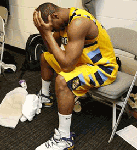
Devasting LostIf not appropriately addressed, end of game failures can result in severe traumatic, lifelong emotion injuries. Therefore, it is imperative that coaches understand the importance of comforting, consoling, and restoring a player’s confidence making sure that the player realizes that failure can be a good learning experience for things to come, not the end of the world. Don’t let the results of a single game spoil a season of accomplishments.

A great example of a coach’s recognition and appropriate response to a potentially devastating situation occurred in the North Carolina/Georgetown NCAA Championship game in 1982. In the final seconds of the game, Georgetown lost a golden opportunity to win the game and NCAA championship, when Georgetown player, Fred Brown, mistakenly passed the ball to James Worthy of North Carolina. Immediately at the conclusion of the game, Georgetown’s coach, John Thompson, went out onto the court put his arms around Fred and comforted and consoled him.

This is what coaching is all about. It is all about the players not the coach or the coach’s record. As long as players give their best effort, they will be the real winners regardless of the score. In every post-season tournament and play-offs, there is only one happy team.


  Join the HoopTactics’ Team and Gain a Competitive Advantage

Annual membership is only $39.95. HoopTactics is a comprehensive resource designed to greatly enhance your basketball knowledge and expertise. It is comprised of a multitude of in-depth, easy to understand, graphical presentations that take you through the inner-workings of hundreds of proven strategies in great detail. Whether you are looking for new ideas or just looking to refresh your memory, you will not find a better basketball resource. Guaranteed! Learn more about Premium Membership  – Click here to visit HoopTactics

{NEW} HoopTactics Online Store


Basketball Staff Sweat Shirt


Basketball Staff and HoopTactics gear. Visit the HoopTactics online store to see what is available that will meet your basketball needs. Free shipping on orders over $60.

 Click Here to visit HoopTactics’ Online Store



FREE Printable Court Diagrams

College/HS, NBA, International court formats. Choose from 36 different styles: Full court (12), half courts (18) and combinations (6 ). Click Here

Now Available on Ipad - Click Here

Basketball Tips & Strategies – February 2012

HoopTactics Newsletter

The Importance of Defensive Stops
Protecting a Valuable Lead
Fouling & Clock Management
Free Court Diagrams

Coaching Tips: The Importance of Defensive Stops

Defensive Stops are the determining factor of any game. A Defensive Stop is a possession in which the opposing team does not score. Defensive Stops occur as result of offensive turnovers and defensive rebounds. Defensive Stops don’t just happen. They are a product of solid defensive play.

  • Defensive Stops are a key element to all offensive runs. It doesn’t do much good to score, if you don’t keep your opponent from scoring. 14 to 2 and 10 to 0 blitzes are a result of combining defensive stops and scoring.
  • Defensive Stops allow you to play through adversity. Defensive Stops during a game buy you critical time when your offense is performing badly and not scoring. If you should experience a four or five minute scoring drought, Defensive Stops will keep you in the game and minimize the hemorrhaging. Instead of falling behind by double digits, you may only lose 2 or 4 points.
  • Defensive Stops neutralize and erase offensive mistakes. Offensive turnovers or bad shots, no matter how severe, can be simply “erased” or cancelled out just by hustling back on defense and making a defensive stop. The only turnovers that hurt are the ones that the opponent scores after.
  • Defensive Stops are vital after bad calls and offensive charging fouls. A bad call by an official, no matter how bad, can be simply “erased” or cancelled out just by turning up the defensive intensity and making a defensive stop on the ensuing possession. During a game a charge/block foul can be a 50/50 call. Anytime an offensive charge is called, it can be “erased” or neutralized with a defensive stop.
  • Defensive Stops are a must after allowing offensive rebounds. Increasing the defensive intensity and determination and making a defensive stop is crucial after giving up an opponent rebound. Like turnovers, the only opponent offensive rebounds that hurt are the ones that they score after.
  • Defensive Stops are also crucial in catching up at the end of a game. All the scoring in the world will do you little good if you don’t keep the other team from scoring.
  • Defensive Stops are also crucial protecting a hard earned lead at the end of a game. End of game leads can evaporate quickly without defensive stops. The best way to protect the lead is by making defensive stops.

 Coaching Tips: Protecting a Valuable Lead

Scoreboard

When ahead late in the game the clock becomes your ally; however, you must use it wisely. Keep it running and do not stop it (unless in very serious trouble). Coaches may elect to spread the court on offense to take time off the clock and cut down on the number of opponent’s offensive possessions. However, if you do so, be sure to continue to make basket cuts and attack the basket. Holding the ball for the sake of trying to run time off the clock will allow the defense to get more aggressive and disruptive. You must attack the basket. Learn more about highly successful and proven spread court offenses – Click Here

End of Game: Fouling & Clock Management

Fouling plays a critical part in the out come of the game, especially when it comes playoff time. Fouls were added to the basketball rule book to penalize; however, intelligent players and teams can use fouls to their advantage. However, when it comes to fouling to gain a competitive edge do not assume that players know how and who to foul at the end of the game. If you just tell a player to go foul, they are most likely to grab or hammer an opponent, and pick up an intentional foul.

  • Players need to be know how, when and who to foul.
  • Players need to be taught the technique of going for the quick steal or trap, and when unsuccessful, to foul immediately.
  • Players must practice this art of fouling and clock management

Learn more about fouling and clock management – Click Here

FREE Printable Court Diagrams

College/HS, NBA, International court formats. Choose from 36 different styles: Full court (12), half courts (18) and combinations (6 ). Click Here

Now Available on Ipad - Click Here

Basketball Strategies – January 2012

"Hoop-y" New Year

HoopTactics Newsletter

The 4 E’s of Basketball
Sideline Out of Bounds Plays
Raising Your Level of Passing
Free Court Diagrams

Quick Tip: The 4 E’s of Basketball

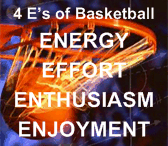
4 E's of Basketball

Energy, Effort, Enthusiasm, and Enjoyment. Coaches must not only have to know what they are doing, but must also have an enthusiasm and enjoyment for doing it. To be successful, coaches must impart this energy to their team.

 Coaching Tips: Disrupting Baseline Out of Bounds Plays

Coaches spend considerable amounts of practice time working on offensive baseline out of bounds plays, but spend little or no time on ways to defend them. As a result, too many easy baskets are given up during the course of the game on out of bounds plays simply because teams are not prepared to stop them.

If you analyze “Out of Bound” situations, they are unique in that it is the only time during the game of basketball where the defense actually has an advantage. Because of this numerical player advantage (5 on 4), it can be difficult for the offensive team to inbound the ball, and, as a result, numerous NCAA and NBA championships have been lost because teams were not able to make successful inbound passes in the final seconds of game.

Most coaches take it for granted that their basic half court defense applies to baseline out of bounds situations. However, this is not the case. Defending the ball when it is located out of bounds behind the defense is entirely different matter than defending the ball when it is out in front of the defense. In addition, in regular half court set offenses, defenders are mostly guarding shooters moving off screens away from the basket. On baseline out of bounds, the shooters are going directly to the basket. As a result, there is no room for error. If the defense makes an error on an out of bounds play it results in an easy basket. Learn More: Four effective ways to combat the baseline out of bounds plays.
Free Area – Click Here
Premium Members – Click Here

Player Tips: Raising Your Level of Passing.

What level of passer are you?

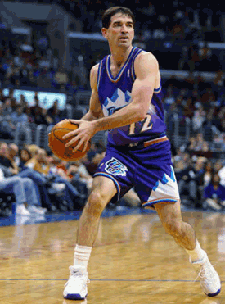
Passer

Level One. Throws the ball to an area just to get rid of it. Common among beginning players.

Level Two. Just throws the ball toward a teammate no matter if they are ready to receive it or not. This is why players and coaches get hit by the ball during practice when just standing around.

Level Three. Surgeon. Passes to a specific target (hand or finger). Leads receivers into good shots. Rarely throws the ball away.

Level Four. Magician. A rare individual that can create open shots for teammates. Makes no look passes. Never throws the ball away.

The ability to move the basketball and hit the open man is a characteristic found in all great players and teams. In order to perfect this ability to its utmost, players must utilize and master the fundamental principles of passing. To learn more – Click Here

Player Development: The Vital Importance of a good inbounds passer

Inbounding the Ball

It is not so easy to inbound ball. Most players and coaches take making an inbounds pass for granted. However, in making an inbounds pass, the passer is facing a five against four defensive advantage and only has five (5) seconds in which to locate a receiver and make a successful inbounds pass. In addition, to this numerical disadvantage, by rule the inbounder cannot move, except after a made shot. This provides the defense with the opportunity to jam or smother the passer very effectively. Also, on baseline out of bound situations, the backboard comes into play and becomes a real obstacle in which that the inbounds passer has to contend.

Many of championships have been lost because teams were not able to inbound ball at end of game. Players on all levels, including the NBA and WNBA, need to know and practice the fundamental skills and concepts required in making a successful inbound pass. In additional to the physical skills involved, good inbound passers must possess a strong commitment to team play since they are taken for granted and very rarely rewarded for the efforts. However, good inbounders are vital, and a team will not win a championship without one. To learn more – Premium Members Click Here

FREE Printable Court Diagrams

College/HS, NBA, International court formats. Choose from 36 different styles: Full court (12), half courts (18) and combinations (6 ). Click HereNow Available on Ipad - Click Here