

Subscribe To The Newsletter Now

Subscribe To The HoopTactics Newsletter

Recently @ HoopTactics


Inside HoopTactics

Motor Skill Learning

The Art of Teaching Basketball

What you will discover or recall:

Motor Skill Learning

Whole-Part-Whole Method

The Why, How and When’s

Motor Skill Learning Factors
Moror learning correct mechanics

The learning and perfecting of basketball skills require active and purposeful participation on the part of the players. However, to be effective, these basketball skills and techniques must be learned and practiced at game speed. Many factors affect the rate which basketball players learn the skills of the game. The primary findings derived from research in motor learning are as follows:

  1. Motivation – motivation is probably the single most important factor used in acquisition of basketball skills.
  2. Conditioning – motor learning is directly dependent upon physical conditioning. Superior conditioning does not just happen nor is it acquired quickly. It is the result of a well planned and executed program of exercise, rest, and diet with rest and diet being just as important as exercise.
  3. Progression – motor learning takes place from the general to the specific. Players must master the fundamentals before more complicated skills can be learned.
  4. Specific – motor learning is specific. Skills must be learned at the same speed which they will be performed during a game.
  5. Practice – repetition is a must for motor learning. The greater the number of times nerve impulses are sent over the nervous pathways, the more firmly established they become until what has been practiced becomes automatic or a habit.
  6. Correct Techniques – proper execution is important. Since bad habits can be practiced as well as good ones, it is imperative that players begin building correct habits from the start. Pay attention to detail. Precise execution and footwork are vital.
  7. Tension – learning is best accomplished under conditions of limited stress and emotional pressure. If the tension level is too low players are apt to become lackadaisical. There is also evidence that most properly prepared teams have a high tension level at game time.
  8. Participation – motor learning demands active and purposeful participation on the part of the players. The best way to learn basketball is to practice BASKETBALL.
  9. Mental practice – motor learning also requires visualization and mental practice. Players should think about the skills and intricacies of the game. More learning and improvement takes place if this is done between practice sessions.
  10. Progressive – new techniques replace older ones as motor learning progresses. The highest level of motor learning is that level which learning is related to the individual in such a way that the knowledge enables him to become self-disciplined.

Whole-Part-Whole Method of Teaching Motor Skills

When teaching or refining basketball skills or plays, it is best to employ the “Whole-Part-Whole Method.” This is a basic principle of motor skill learning. The “Whole-Part-Whole” method of teaching involves introducing it, breaking it down into its components, and then executing it in its entirety.

1. The Whole

Introduce and explain the offense or play, using visual means when available. Next, on the court, walk through the offense explaining and demonstrating all of the options along with their basic defensive reads and counters. Then, have the players walk through the reads and their counters. Be sure to answer and clarify any questions players may have.

2. The Part
Motor learning teaching parts

Teaching is the “Part” of the “Whole-Part-Whole” method of motor skill learning. You teach the part so that players can understand and comprehend the Whole. The “Part” is further broken down into “WHY, HOW & WHEN.”

The Why. . .

Sadly, most coaches and personal skill trainers concentrate totally on the “How.” However, the “Why” is more important for players to know and understand than the “How.” If they understand “Why” they will be better prepared learn the “How.”

Basketball is a game of counters, especially on offense. It is called “Read & React.” By understanding the “Why” players will much more readily read a situation and physically react correctly. If they are only taught the “How”, players tend to make mental errors and mistakes because they misread situations.

The How. . .

Break down the offense or play down into its components with the use of breakdown drills. Get your teaching done during breakdown drills, insist on proper footwork and execution. Cover only two or three of the basic reads per practice until all reads and counters have been covered.
Flipping sides of the court

Be sure to demonstrate and practice both sides of the court separately. Flipping sides on offense and skill building requires, not only opposite hand and footwork, but for the entire brain to reverse everything as well.

The When. . .

By combining the intellectual aspect “Why” with the physical ability “How” improved play will definitely become very apparent and noticeable. Once players have working knowledge of the “Why” and “How, the “When” becomes automatic resulting in improved motivation, initiative and confidence on the part of the players.

3. The Whole

Go live, motor skills must be learned at game speed. You want to practice against good defense. Don’t wait until game time. Motivate the defense. For example, have the defense make 5-6 stops (combination of defensive rebounds, offensive turnovers, and steals) before they can go to offense. No dummy defense! The toughest defense you face all season should be in practice. The offense will probably struggle at first. However, players will learn to adapt to the importance of creating leads and attacking defensive pressure.

.

Five Stars

_____________________

Coming Next:

Game of Habits

_____________________

Art of Teaching Basketball Series
#1Coaching, Life Skills, Keys to SuccessTap Here to View
#2Legal LiabilitiesTap Here to View
#3Major Medical EmergenciesTap Here to View
#4Motivation & LearningTap Here to View
#5Player Learning StylesTap Here to View
#6Motor Skill LearningTap Here to View
#7Game of HabitsTap Here to View
#8Changing Bad Habits8/18/2020
#9Goal Setting & Season Review8/25/2020

Player Learning

The Art of Teaching Basketball

What you will discover or recall:

Types of Learners

Learning is Best When

What coaches can do to improve learning

Coaching Success

Individual Learning Styles

There’s no one size fits all when it comes to learning. In fact, everyone is different. However, there are four common types of learners. To be successful in teaching basketball skills, coaches must be cognizant and utilize all four of these learning techniques:

  1. Visual. Visual learners best comprehend information by visualizing relationships and ideas. They learn by seeing.
  2. Auditory. Auditory learners are all ears. They learn by hearing.
  3. Kinesthetic. Kinesthetic learners learn physically by doing and exploring. They learn by feel or touch.
  4. Written Word. Written Word learners learn by reading and writing. They learn by reading.

Coaches are responsible for making learning interesting, relevant and fun. However, with the current emphasis on games and winning rather on player development and skill learning, the vast majority of players today are having bad experiences with coaches and basketball. This is a real problem. It is mainly the result of basketball coaches not being adequately trained, certified, and accountable.

Since players mature and develop at different rates, it is best to group young players by maturity and experience rather than by age. In addition, most “Bigs” require extra work and patience since they do not become productive until college age.

Learning is definitely enhanced when:

  • The coaching staff is enthusiastic, well versed and knowledgeable.
  • The physical and social environments are conducive to learning.
  • It is appropriate to the emotional and physical maturity level of the players.
  • It involves strong support and encouragement (under-achievers will excel on occasions, while the talented are consistent).
  • It includes activities using as many senses as possible. Learners remember 10% of what is read, 20% of what is heard (75% is forgotten after 2 days), 30% of what is seen (majority of learning), and 50% of what is heard and seen.
  • It is sequential and logical, progressing from concrete to more abstract concepts (one on one skills before five on five skills).
  • It involves activities that are appropriate to the specific situation. The best way to LEARN basketball is to PRACTICE basketball.
  • It is purposeful and fully understood by the learner (boxing out on rebounds).
  • It is the result of functional understanding. Players must gain a working knowledge of the game (what, when and why should be very clear and specific).
  • It involves constant repetition and practice using correct techniques.
  • It encompasses the teaching of cognitive (knowledge), psychomotor, and attitudinal (confidence) skills to develop the complete player. Attitudinal skills are the toughest to achieve.

. . . when it is FUN!

.

What Coaches Can Do to Improve Player Learning

1. Get off on the right foot. Greet and welcome every player daily with enthusiasm. “Another great day for basketball.” Players should feel welcomed and anxiously look forward to practices. This is especially true for young or beginning players.

2. On every level of basketball, one of the most important aspects of coaching is creating and fostering a total team atmosphere and commitment. It is the difference between success and failure.

  • Insure your players that they are going to play in a team atmosphere.  Inform your players that you are not going to tolerate anyone on the team that keeps others from learning, you from coaching, or any other misbehavior.
  • Great teams are a result of the best players being the hardest workers. 

3. Do your homework. Practices should be well organized and planned. Every drill must have value or purpose otherwise throw it out. Alternate physically tough and easy drills. Include individual work in each practice.

  • Be sure to teach WHEN and WHILE as well as the HOW. There are certain fundamentals every player must master and, in addition, each position also has specific fundamentals to learn.
  • Don’t expect players to know or execute anything that has not been covered in practice.
  • During a game, if a situation arises for which they are not prepared, take note and address it in the next workout rather than trying something new during a game.

4. Develop all your players to the best of their capabilities. Coaching great players is easy. Where great coaches excel is in getting the most out of every player on the squad regardless of physical abilities and skills.

  • Establish significant roles and assignments for every player on the squad such as 6th Person, Defensive Stopper, and Designated Inbounder.
  • These roles are vital to a total team effort. They must be constantly acknowledged and reinforced by the entire coaching staff throughout the season.

5. It is imperative that anytime a coach speaks that everyone listens including other coaches. Demand and get eye contact of all players prior to speaking.

  • Do not get caught up with lengthy explanations.
  • Use constructive criticism when appropriate, but never yell. Have you ever heard of a successful teacher that yells at their students?
  • Set an example. Never use profanity. Educated people can clearly express themselves without the use of profanity.

6. The importance of “Early Time,” the time when players arrive until practice actually begins, cannot be over emphasized. This 20 to 30 minute period allows for players to arrive and mentally prepare for practice. This is especially needed, when players have to travel to practice.

  • Although, most coaches tell their players to use this time wisely and work on individual skills; in reality, most of this early time is spent socializing.
  • It is the foundation of a successful workout. Early Time does not only prepare players physically, but more importantly, it puts them in the right frame of mind. With a proper use of early time players will be able to better concentrate, understand, and learn. As a result, more will be accomplished much more during the ensuing practice.

7. Clarify rather than confuse. Do not over coach. Keep instructions simple. Teach using quick mental terms. Associate a technique with a name by using one syllable words such as “Ball”, “Shot”, “Down”, “Push”, etc. Make sure that the coaching staff use the same offensive and defensive terminology.

Point out and commend good efforts and actions rather than negative ones. During each practice, point out and recognize something positive for every player. Be sure to always use players’ first names when pointing out a positive efforts or actions. It gives them a feeling of pride and recognition.

8. Use “I” & “I” psychology (Isolate & Ignore). When a player misbehaves or is not giving their best effort, just send them to the showers. The worst punishment for a basketball player is to deny them participation. In denying participation, it encourages and promotes good behavior and effort. If the entire team is not working hard, send the entire team to the showers. They will get the message.

9. The game within a game. Make individual development and improvement an integral part of every practice. Provide each player with a list of individual skills to stress and improve on during the practice.

  • The specific skills will vary from player to player and can be assigned by the coaching staff or determined by the players themselves.
  • As a reminder, the skill(s) should be written on a 3 X 5 card and given to each player prior to practice.
  • Individual skill development may take several practices to achieve.

10. Make drills competitive and challenging. Turn punishment motivation into reward motivation. For example: “One & One and Run” free throw shooting drill commonly used to practice free throws under pressure.

  • Using Negative or Punishment Motivation: If a player misses the first free throw of the One & One bonus situation, they run a set of lines. If they miss the second free throw, they run the length of the court. If they make both free throws, they just get to go to the end of the line.
  • Using reverse psychology and competition turn Punishment motivation into or Reward Motivation: If a player misses the first free throw, they just go to the end of the line. If a player makes the first free throw but misses the second, they run the length of the court. When they make both free throws, they run a set of lines. The first player to run 10 sets of lines wins! The rest of the players (losers) have to do ten pushups.
  • In the first punishment scenario, poor free throw shooters spend most of the time running (conditioning) while the good free throw shooters just shoot. In the second reward scenario, the good free throw shooters run (condition) while the poor free throws shooters practice shooting.

11. Motivate the defense during scrimmages by requiring the defense to make a certain number of defensive stops (combination of defensive rebounds, steals and turnovers) in order to go to offense.

  • This will encourage and motivate the defense to play hard.
  • In practicing against tough defense, it will definitely better prepare the offense for actual games.
  • Practicing against a weak or dummy defense is detrimental to game preparation.

12. End all practices on a high note or successful achievement such as a made pressure free throw, shooting contest, or a made half court shot. Be sure to review what was learned or emphasized along with what will be covered in the next practice.

Coaching Success

The real success in coaching does not come from winning. It comes with the teaching and assisting ALL of your players to become the best they are capable of becoming “On” and “Off” the court. The time they spend with you should be a lifelong, rewarding and positive experience. Too many players are having bad experiences with coaches.

To Learn More About Motivation & Learning – Click Here

.

Five Stars

_____________________

Coming Next:

Motor Skill Learning

_____________________

Art of Teaching Basketball Series
#1Coaching, Life Skills, Keys to SuccessTap Here to View
#2Legal LiabilitiesTap Here to View
#3Major Medical EmergenciesTap Here to View
#4Motivation & LearningTap Here to View
#5Player Learning StylesTap Here to View
#6Motor Skill LearningTap Here to View
#7Game of HabitsTap here to view
#8Changing Bad Habits8/18/2020
#9Goal Setting & Season Review8/25/2020

Player Motivation

The Art of Coaching Basketball

.

What you will discover or recall:

Motivation

Player Motivation

What Coaches Can Do To Improve Player Motivation

Player Motivation

Basketball, with its immediate feedback, is unique in that it is the only sport that you can enjoy for hours by yourself at any age. All you need is a ball, and a hoop. With other sports such as football, soccer and baseball, you may kick or throw the ball for a while before giving up and quitting. However, with basketball, you can, and will, shoot as long as your heart desires.

All great coaches, past and present, all have one thing in common, They are all great motivators. They inspire their players to become the best that they are capable of becoming. They have the ability to motivate their players to do things they don’t like to do, and like it. It is the coach’s primary responsibility and job to motivate and encourage all of their players to be determined to constantly learn, improve and to be the best that they can be on and off the court. Without desire and determination to improve, all of the other mental factors are meaningless.

Motivation

Motivation is the force that initiates, guides and maintains behavior and habits. It is what causes everyone to get started. The key to getting motivated is to make it easy to get started. However, it is much easier to finish a task that it is to start it. Most players struggle and find it difficult to generate the motivation needed to get started and achieve their goals. However, if they have a schedule, they will generate the willpower and desire. Having schedules also makes decision making automatic.

Motivation can be either intrinsic (a self-curiosity or desire to know) or extrinsic (a definite or must need to know). In basketball, self or intrinsic motivation is the most effective and long lasting. Player motivation can be also influenced by reward and punishment. However, both reward and punishment are more harmful than helpful. They are temporary and counterproductive. Once reward or punishment is no longer provided, behavior reverts back to its original state. As a result, in basketball, it is much better for players to be self-motivated anxiously looking forward to practicing rather than to fear going to practice.

Motivation Competitive Edge

Motivation improves a player’s:

  • Desire and Effort
  • Determination and Persistence
  • Intellectual & Mental Learning
  • Initiative & Resourcefulness

Warning signs of non-motivated players:

  • Preferences: Making one choice over another, such as watching TV instead of doing homework.
  • Resistance: The longer the time it takes to do a task, the less one is motivated.
  • Enthusiasm: Less effort indicates less motivation.
  • Determination: The quicker a player gives up, the less motivated.
  • Negative Expressions: The more signs of displeasure, the less motivation.
Player appreciation

Player motivation is definitely enhanced when coaches:

  • Possess a positive attitude using the four E’s of basketball (Energy, Effort, Enthusiasm, & Enjoyment).
  • Value All Efforts. Appreciate and recognize all efforts big or small.
  • Keep All Players Involved. The more involved, the more they feel useful and appreciated.
  • Use Incentives. Praise and recognize good & positive efforts.
  • Change Things Up. It keeps players from getting bored. Be creative and include fun and games.
  • Explain “Why.” Tell them why it is so important.
  • Do not talk down. It makes players feel stupid, slow, useless and upset.
  • Help manage anxiety. Young players have a hard time staying motivated because they are worried about failure. ESPN adds to this by only showing successful shots and plays.
  • Show players how to be motivated. Explain the reasons and benefits in wanting to learn.
  • Set realistic expectations. It takes seven years to develop individual basketball skills. As a basketball player you never stop learning.
Misleading players & parents

To Learn More About Motivation – Click Here

.

Five Stars

_____________________

Coming Next:

Player Learning Styles

_____________________

Art of Teaching Basketball Series
#1Coaching, Life Skills, Keys to SuccessTap Here to View
#2Legal LiabilitiesTap Here to View
#3Major Medical EmergenciesTap Here to View
#4Motivation & LearningTap Here to View
#5Player Learning StylesTap Here to view
#6Motor Skill LearningTap Here to View
#7Game of HabitsTap Here to View
#8Changing Bad Habits8/18/2020
#9Goal Setting & Season Review8/25/2020

_____________________

Medical Emergencies

The Art of Teaching Basketball

What you will discover or recall:

Player Safety & Injuries

Medical Emergencies & Response Plan

Major Medical Emergencies

Player Safety

Player safety is an awesome responsibility and liability that is inherited with basketball coaching. It includes facility and equipment usage, proper skill & technique instructions, educating players, warming up & cooling down, and providing sufficient player rest during practice or games.

 Prior to any practice, game or open gym, make sure the facility is safe. Adhere to the first aid adage, “Ounce of prevention is worth a pound of cure.” Learn to be cognizant of potential dangers and hazards around the court area at all times. Double check to see that all standards are stowed out of the way, balls remained picked up, water is not on the floor, etc.

Player Injuries

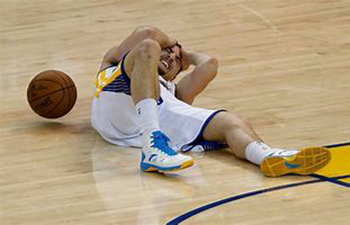
Unfortunately, in basketball injuries do occur. Most injuries will be minor. However, life threatening injuries can and do occur. Therefore, all coaches must be first aid trained and certified.

  • Create a list of players’ emergency phone numbers and keep it available at all times.
  • Be fully aware of any health problems your players may possess.
  • Be extremely cautious when it comes to head, neck and back injuries.
  • Make sure that a first aid kit and supplies are available including ice or cool packs for every game and practice.
  • Adhere to the first aid adage, “An ounce of prevention is worth a pound of cure.” Learn to be cognizant of potential dangers and hazards around the court area at all times.
Current First Aid Certification

If not, now  is a great time to become current. Training and certification does not take much time and the benefits are priceless. CPR (cardiopulmonary resuscitation) training is just not a simple matter of meeting a coaching certification requirement. It is a matter of obtaining the knowledge and capability to save the life of one of your players. Coaches should not step on the floor without it.

Major Medical Emergencies

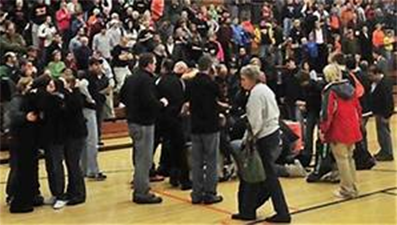
Medical emergencies can be terrifying experiences, especially when unprepared for them. They can take place on the court, in the stands or in transit. It is not always easy to determine how to help in the event of a medical emergency since there are many ways to help, such as summoning first responders, providing immediate care, and keeping the scene safe.

Emergency Response Plan

Medical Emergency Plan of Action

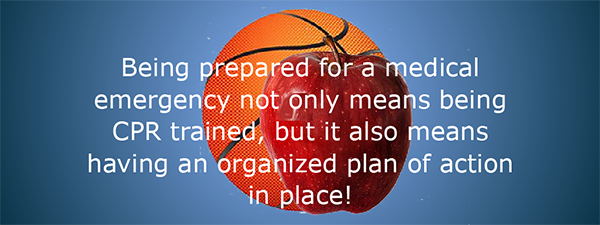
This emergency response model is applicable to all basketball programs on all levels, youth through professional, not just high schools. If you are conducting a basketball program on any level, it is your responsibility to have an automated response system in place in the event of an emergency.

Organizing an automated major medical response system requires coaches to spend 10 minutes at the beginning of each team’s season asking questions of his/her team as to how many have been trained in CPR and would they be willing to assist in the event of an emergency if needed? From this dialog, players are then assigned emergency roles. This creates an automatic response system which allows the coach to remain with the victim without having to give direction.

Automated Response Assignments:

1. At least two players are assigned to call 911.

2. At least two players are assigned to run to the athletic trainer’s or nurses office.

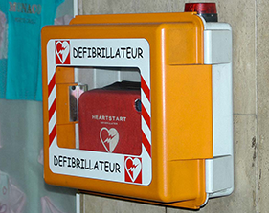
3. Two players are assigned to know where the nearest AED device is and to go retrieve it.

4. Other players are assigned to go to a predetermined location to meet the medics or an ambulance.

After those assignments have been made, the coach fills out a worksheet, which is kept on record in the school’s athletic office. Each team is required to review the assignments periodically during the season.

Printable Medical Emergency Response Assignment Form – Click Here

Sudden Cardio Death

Sudden Cardio Death

Sudden Cardio Death is the number one cause of death among athletes. However, with the proper preparation and response, the chances of a player’s survival is great. Organizing and having an automated response system in place is critical.

In the United States over 100 sudden cardio deaths occur annually among middle school, high school and college athletes, with basketball having the highest risk. That is one every three days. The risk of sudden cardiac death among NCAA Division I male players is 1 in 3,000. The risk is 3X greater in African-American players than Caucasian players. The risk of sudden cardio death is also 3X greater in males than females.

The good news is, if CPR is started and defibrillation applied within the first few minutes of sudden cardio death, the chances of survival is great. Automatic External Defibrillator (AED’s) are now required by law in public malls, airports, and casinos. However, 30 states still do not require them in schools. Make sure your school or venue has one available.

Proper use of an Automatic External Defibrillator (AED) is relatively simple matter and only takes a few minutes to learn. AED’s are practically “dummy” proof. They will only automatically fire (shock) if it is warranted. Note: Coaches’ accessibility after school hours can be a problem that needs to be address.

Learn more about Sudden Death – Click Here

Concussions

Concussions

Choices made immediately after a concussion could mean the difference between recovery and permanent injury. Signs and symptoms normally show up along with the injury. However, the severity of the injury may not show up for hours or days later. Concussions are a type of traumatic brain injury that can have a serious effect on the brain. While most players with a concussion recover quickly and fully, some will have concussion symptoms that last for days, weeks, or even months. Recognizing and responding properly to concussions when they first occur can help prevent further injury or even death.

Learn more about concussions – Click Here

Post Traumatic Stress Disorder (PTSD)

Be aware that Post-Traumatic Stress Disorder is an anxiety disorder that can develop after a person experiences a terrifying or extremely traumatic event. While Post-Traumatic Stress Disorder is mainly a result of being directly involved with a major medical emergency, you can also develop PTSD just by witnessing a traumatic event or long after the event.

If not recognized and treated, Post-Traumatic Stress Disorder can have serious repercussions. These repercussions can range from feeling of extreme fear, anger, guilt, anxiety or helplessness. If any of these symptoms should occur, it is imperative to seek professional therapy and counseling immediately.

Learn About First Aid Treatment & Care of Common Basketball Injuries

Common Basketball Injuries

Five Stars

_____________________

Coming Next:

Player Motivation

_____________________

Art of Teaching Basketball Series
#1Coaching, Life Skills, Keys to SuccessTap Here to View
#2Legal LiabilitiesTap Here to View
#3Major Medical EmergenciesTap Here to View
#4Motivation & LearningTap here to View
#5Player Learning StylesTap Here to View
#6Motor Skill LearningTap Here to View
#7Game of HabitsTap Here to View
#8Changing Bad Habits8/18/2020
#9Goal Setting & Season Review8/25/2020

_____________________